Appliance Removal in Orlando, FL
Refrigerators, freezers, washers, dryers, stoves, dishwashers and water heaters wheeled out of the kitchen, garage or back porch and taken to a metal recycler. Price agreed in writing before the dolly comes in, same-day and next-day pickups available.
- Refrigerant units accepted
- Recycled under Florida law
- Price settled before loading
What appliance removal in Orlando covers
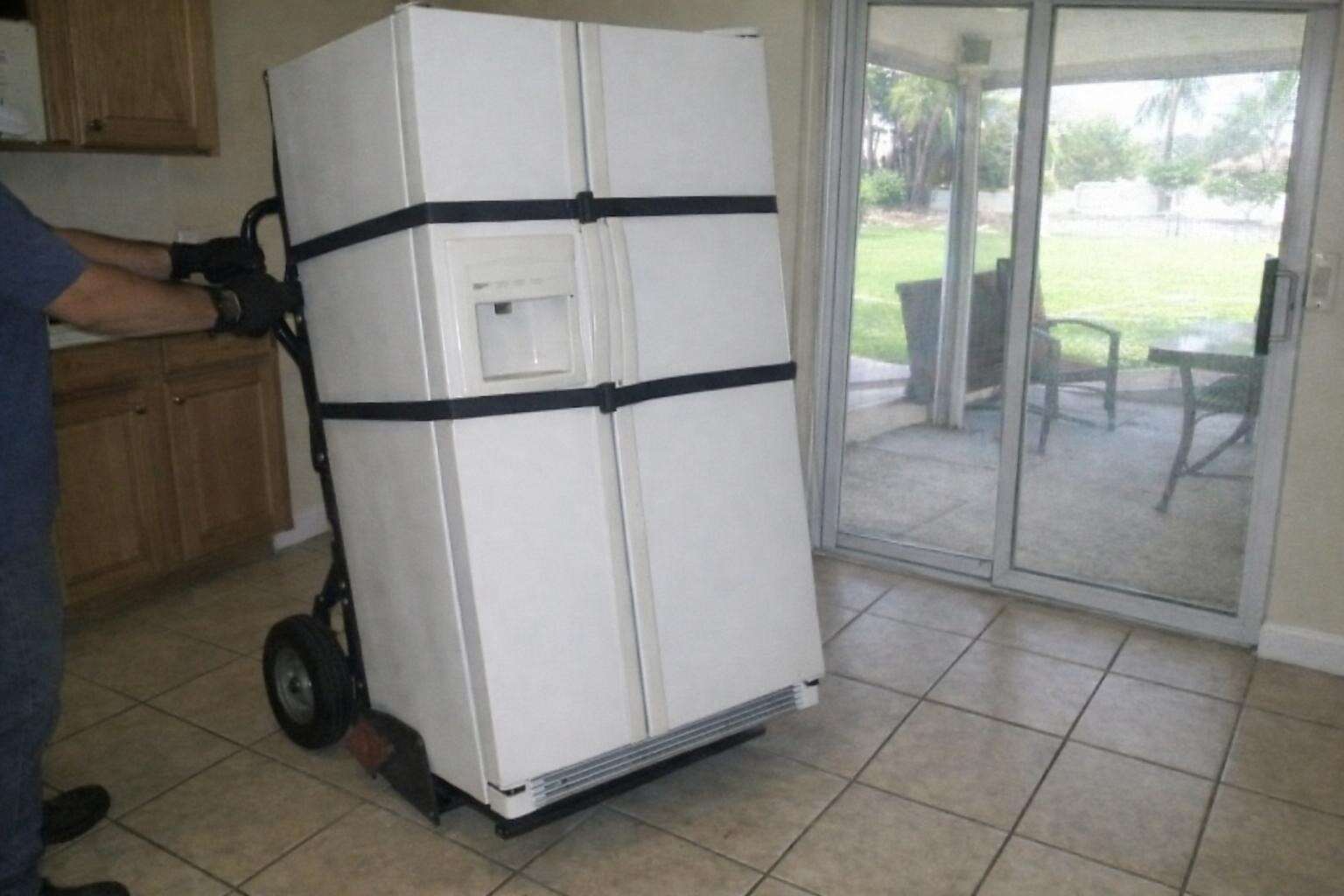
Appliance removal means the crew that takes the job unplugs the unit if it is still plugged in, straps it to a dolly, wheels it out through the kitchen, the garage or the lanai screen door, loads it and delivers it to a metal recycler, with the price agreed in writing before it leaves the wall. Refrigerant appliances are included, which matters in Orange County because the county curbside program refuses them. Water lines should be shut off and gas lines shut and capped before the visit; the hauler we route handles the carry and the disposal and leaves plumbing and gas work to the trades that hold those licenses.
Most household and light commercial appliances go on the truck.
- Refrigerators, side-by-sides, chest freezers and upright freezers
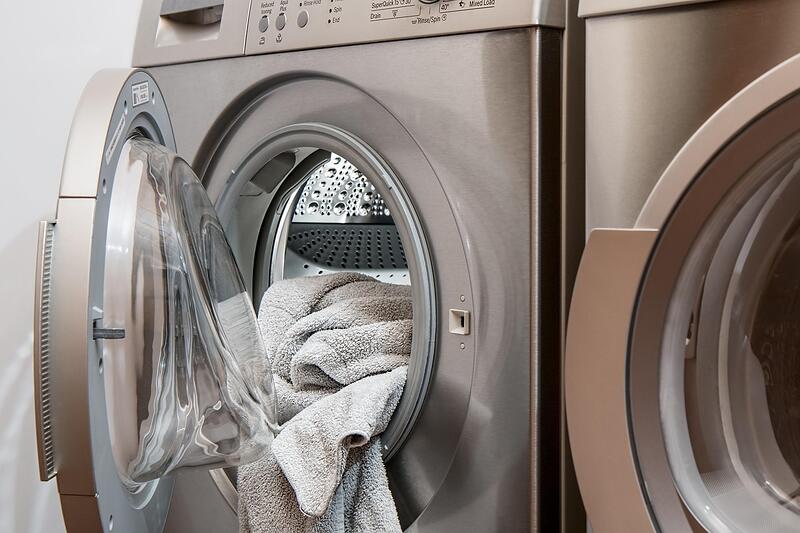
- Washers, dryers and stacked laundry units
- Stoves, ranges, cooktops, wall ovens and range hoods
- Dishwashers and garbage disposals already pulled from the cabinet
- Water heaters, tank and tankless, drained
- Window and portable air conditioners and dehumidifiers
- Microwaves, wine coolers, ice makers and mini fridges
- Treadmills, ellipticals and other heavy equipment that moves like an appliance
- Commercial reach-ins, ice machines and restaurant ranges by arrangement
A few things stay behind, and the dispatcher goes through them before the estimate is sent.
- A refrigerant unit that is leaking, where the hauler has no recovery route for it
- Appliances still connected to a live gas line
- Propane cylinders, fuel, paint, solvents and other hazardous material stored beside the appliance
- Commercial refrigeration systems with remote compressors, which need an HVAC contractor first
A tired fridge that still has food inside is fine. Mention it and the crew brings bags. TVs and electronics ride along on the same truck for a separate fee and are covered further down. Whole kitchens being torn out belong under construction debris removal, and a garage full of dead appliances and everything else under garage cleanout.
Will you take a dead fridge or freezer, and is there a refrigerant fee?
Yes, a dead refrigerator or freezer is the most common appliance call in Orlando, and refrigerant units carry an adjustment that is named in the estimate because the gas inside has to be recovered by a certified technician before the unit is scrapped. EPA Section 608 requires that recovery, holds the final party in the disposal chain responsible for it, and requires that party to keep a signed recovery statement; a sticker on the unit is no substitute. A hauler who takes refrigerators therefore needs a recycler that does the recovery, and the cost of that step is what the adjustment covers. It is the same reason the county truck drives past them.
What the pickup looks like in practice is plain. The crew empties the unit if it has not been emptied, tapes the doors shut or removes them, straps it upright on a dolly, and wheels it out. A chest freezer behind the house on soft ground is a two-person carry and is priced as one. A refrigerator in a second-floor condo kitchen is priced with the elevator or the stairs in the range. Nothing is drained or cut on the property, and the refrigerant stays sealed in the compressor until the recycler recovers it.
How much does appliance removal cost in Orlando?
A single appliance is priced on its own, and the written estimate carries that number before the dolly comes through the door. HomeGuide's May 2024 price list puts a washer or dryer at $70 to $205 nationally, and Fixr (January 2025) gives a minimum load of about 60 cubic feet, which is roughly one large appliance, at $75 to $125. A refrigerator or freezer sits toward the top of those bands because of the recovery step. Two or three appliances together usually land in the minimum-to-quarter-truck range; a whole kitchen plus laundry pair runs toward a half truck.
| Job | Typical national range | Source |
|---|---|---|
| Minimum load (one large appliance) | $75 to $125 | Fixr, Jan 2025 |
| Washer or dryer | $70 to $205 | HomeGuide, May 2024 |
| Average mixed load | $150 to $350 | HomeGuide, May 2024 |
| Full truck | $450 to $650 | Fixr, Jan 2025 |
What moves the appliance number
Four adjustments cover nearly every appliance job, and each is listed on the estimate before booking.
- Refrigerant: refrigerators, freezers, air conditioners and dehumidifiers, for the recovery step
- Stairs, elevators or a long carry from a back porch or a detached garage
- Weight that needs a third person: commercial units, cast-iron ranges, full-size safes riding along
- Distance to the recycler or to the Young Pine Road landfill from the edge of the county
For a load that mixes appliances with furniture and bags, the crew prices by the fraction of the bed it fills and shows you the bed before and after loading so the fraction on the invoice is the fraction you watched go in. No deposit, card or invoice when the appliance is on the truck and the floor is wiped, and tips are never expected.
How a refrigerator is recycled and the refrigerant recovered
A short news segment on why a refrigerator cannot go in the trash, how the refrigerant and oil are recovered, and what the recycler does with the metal.
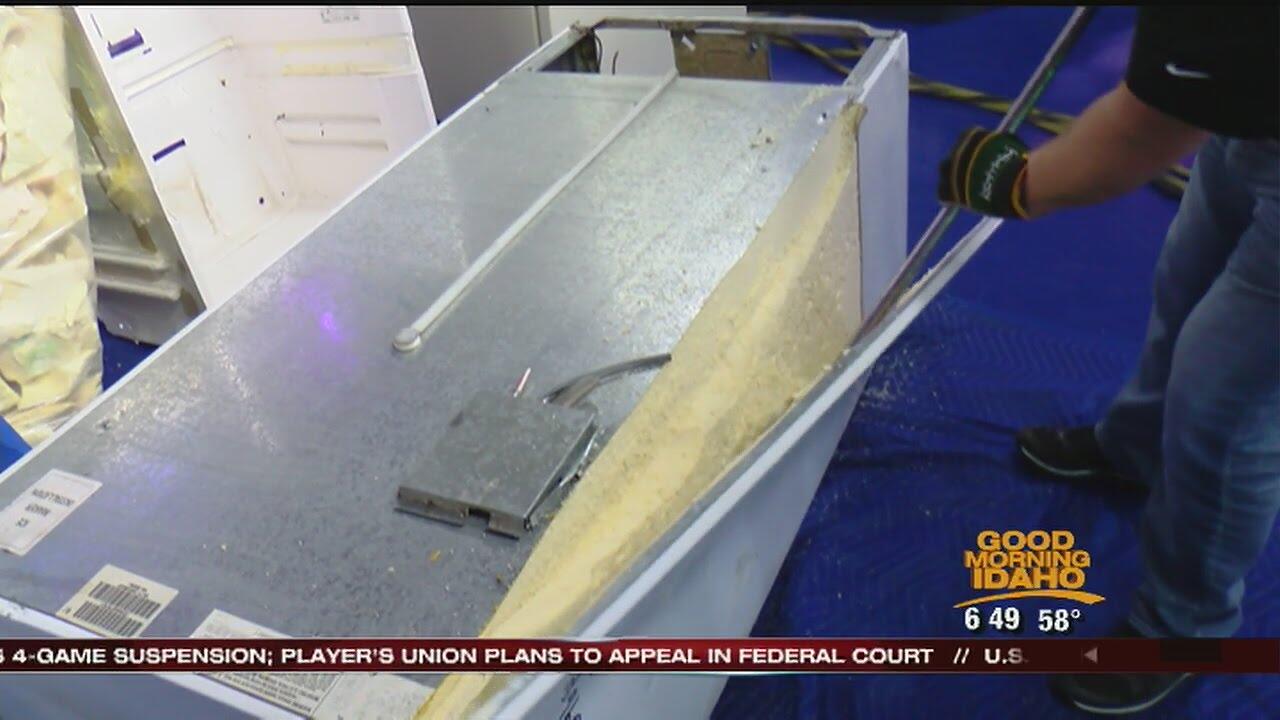
Video: Idaho News 6 on YouTube
Free ways to get rid of an appliance in Orlando first
Inside the Orlando city limits, a refrigerator, dishwasher, washer or dryer counts as one of the two free large items picked up on your yard waste day, with the refrigerator or freezer doors removed before set-out (orlando.gov). That is the best free route in the metro, and the estimate call starts by asking whether your address qualifies. Unincorporated Orange County households get a weekly three cubic yard large item collection that takes washers, dryers and stoves, but the county program excludes refrigerators, freezers and air conditioners outright because of the refrigerant (ocfl.net). County residents are told to have the delivery company take the old unit or haul it to the landfill themselves.
The self-haul option is cheap if you own a truck and two strong friends: the Orange County landfill on Young Pine Road accepts a refrigerant appliance for the $10 minimum charge. Scrappers also pull metal appliances off the curb for free in most neighborhoods, usually within a day, though a fridge left on the curb is a hazard to children and many HOAs will not allow it.
When the paid pickup is the better call
The paid pickup earns its fee at an unincorporated address with a dead refrigerator, in any kitchen where the appliance has to come up a step or down a flight, and on any day the delivery truck is bringing the new unit and the old one has to be gone before it arrives. It also covers the chest freezer that died behind the house during a power outage with the meat still in it, which no free program and no scrapper wants to touch.
Do you take TVs and electronics with the appliances?
Yes, TVs, monitors, computers, printers and anything else with a circuit board go on the same truck for a separate line item on the estimate, because electronics are routed to a recycler instead of the landfill. Florida has no electronics landfill ban, but Orange County asks residents to keep anything with a circuit board out of the trash cart and bring it to the household hazardous waste sites, and a hauler running a proper route does the same. Rear-projection and tube televisions are heavy and awkward and are priced with that in mind.
For a self-haul, electronics are accepted free from residents at the household hazardous waste drop-off at the Young Pine Road landfill and the Porter transfer station on Good Homes Road, Monday to Saturday, 8am to 5pm. The same drop-off takes the things that stay off the truck: paint, pesticides, propane, fluorescent bulbs, pool chemicals and rechargeable batteries. The dispatcher lists the no-take items at quote time so nothing is left standing in the garage after the truck pulls away.
Why appliance removal in Orlando comes down to the refrigerant rule
Orlando is one of the few places where the free curbside program depends on which side of a city line you live on: a city resident can set a doorless refrigerator at the curb for free, and a neighbor a mile away in unincorporated Orange County cannot, because the county program excludes refrigerant appliances entirely. That split is the reason the dispatcher asks for the address before anything else. Washers, dryers and stoves are curbside items in both programs; refrigerators, freezers and air conditioners are where the paid hauler does most of its appliance work.
The housing stock adds to it. The City of Orlando counted 152,600 housing units in the 2023 American Community Survey, with 60.5 percent of occupied units rented, and every turnover of a rented kitchen is a chance for a landlord to swap a failing unit before the next lease starts. Around Kissimmee and the Four Corners area, where Osceola County reports more than 30,000 vacation homes (Experience Kissimmee, July 2026), rental managers replace refrigerators and laundry pairs on a schedule and need the old ones gone between guests.
Hurricane season, June 1 to November 30, produces its own appliance work. A multi-day outage after a storm like Ian in 2022 or Milton in 2024 leaves chest freezers and refrigerators full of spoiled food across the county, and the county storm debris program collects vegetative and construction debris only, and leaves household garbage and appliances where they sit. The storm debris page covers the rest of what the county leaves behind.
Where the appliances go after pickup
Every appliance picked up by the haulers routed from here goes to a metal recycler, because Florida law leaves no other legal destination for it. Florida Statute 403.708(12) bars landfilling white goods, along with lead-acid batteries and used oil, so a refrigerator or washer cannot be buried at Young Pine Road even if someone wanted to pay the tipping fee. At the recycler, refrigerant and compressor oil are recovered by a certified technician under EPA Section 608, the recycler signs the recovery statement, and the steel, copper and aluminum are separated and sold. The EPA's most recent national figures (2018) put major appliances at 5.3 million tons of waste generated in a year, and the metal in them is one of the most reliably recycled streams in the whole system.
An appliance dumped in a retention pond or a wooded lot is a crime under the Florida Litter Law. A refrigerator alone weighs well over the 15-pound threshold, so dumping one is at least a first-degree misdemeanor with a fine up to $1,000, and a load of several or any commercial dumping is a third-degree felony with a fine up to $5,000 (Fla. Stat. 403.413 and 775.083). A hauler who cannot name the recycler is worth a second question.
What to check before the appliance crew arrives
Two credentials and three plain answers cover an appliance pickup. Florida has no state license for hauling, so the credential to ask about is an Orange County Business Tax Receipt plus liability insurance; the haulers routed from here hold both, and whoever attends can show proof of insurance on request. For refrigerant units, the second thing to ask is which recycler takes the unit and recovers the gas, because the recovery statement lives at that end of the chain.
- Proof of liability insurance, shown on request.
- The name of the recycler that takes refrigerant units.
- The written range, with the refrigerant adjustment and the stairs named, before the dolly comes in.
- The no-take list repeated at quote time: live gas connections, leaking units, fuel and chemicals.
- No deposit, and payment only when the appliance is on the truck.
People apologize for the smell of a freezer that died in July as if the crew has never met one. They have. Bring it up on the phone and the crew arrives with bags and tape, and the garage smells like a garage again by the afternoon. The about page explains how the pickup is arranged, and the contact page has the phone number and hours.
The services that usually sit beside this one
Most Orlando pickups mix two or three of these, and the pages below describe the ones that most often ride on the same truck.
- Junk Removal: Mixed household loads priced by the fraction of the truck they fill, agreed before loading.
- Garage Cleanout: From packed to swept in one visit, with the paint and chemicals routed correctly.
- Construction Debris Removal: Drywall, tile, lumber and torn-out fixtures hauled to the one county site that takes them.
Most appliance calls are part of a bigger clearout, and the about page explains how the pieces get priced on one sheet.
How an appliance pickup gets arranged
Four steps, with the price settled before the appliance leaves the wall.
-
Say what it is and where it sits
Call (407) 326-0014 or send a photo of the appliance and the doorway. Say whether it is a refrigerant unit, whether it is disconnected, and what floor it is on.
-
Approve the written range
The estimate names the unit, the refrigerant adjustment if there is one, any stairs and the recycler it is headed to. Free, no obligation, and nothing is booked until you say yes.
-
Pick a slot
Pickups run 7am to 7pm Monday to Saturday, Sunday by arrangement, with same-day and next-day slots available for most appliance jobs. You get a call when the truck leaves the previous stop.
-
Wheel out, load, pay
Whoever attends confirms the number against the appliance, straps it to a dolly, protects the floor and door frame, and loads it. Card or invoice once it is on the truck.
Why Orlando homeowners route appliance pickups through this line
Three things that hold on every appliance pickup arranged here.
Refrigerant units the county refuses are the specialty
Unincorporated Orange County will not collect a refrigerator, freezer or air conditioner at the curb, so those units are most of the appliance work in the metro. The haulers routed from here take them, deliver them to a metal recycler that recovers the refrigerant under EPA Section 608, and name the adjustment for that step on the written estimate rather than at the door. Washers, dryers, stoves and water heaters ride on the same truck at a plain per-item price.
ocfl.net: refrigerators, freezers and air conditioners are excluded from the county's weekly large item collection.
Priced per item, in writing, before the dolly comes in
An appliance is priced on its own instead of as a fraction of a truck, with stairs, long carries and refrigerant listed as separate lines. The number you approve is confirmed against the unit when the crew arrives, before it is unplugged. No deposit is taken, payment is by card or invoice once the appliance is loaded, and tips are never expected. If you add a second unit on the day, it is priced and agreed before it moves.
HomeGuide (May 2024): a washer or dryer runs $70 to $205 nationally, and the written range sits inside that band.
Recycled because Florida law allows nothing else
Florida Statute 403.708(12) bars white goods from landfill burial, so every appliance picked up goes to a metal recycler where the refrigerant is recovered and the steel, copper and aluminum are separated. The haulers routed from here hold an Orange County Business Tax Receipt and liability insurance, and proof is available from whoever attends. Ask which recycler the unit is headed to and the answer comes with the estimate.
EPA (2018): 5.3 million tons of major appliances entered the US waste stream in a year.
What Reddit Says About Appliance Removal in Orlando
Appliance threads on Reddit are thin compared with the furniture and junk threads, and they agree on one thing: scrappers take metal appliances off the curb for free in most cities, so the person who pays a hauler has an appliance that cannot get to the curb or that the city refused. The three cases named are a refrigerator in a basement, a dead freezer behind the house, and a refrigerant unit the municipal program would not collect. Orlando has few basements, and the other two describe most of the calls here.
The prices people report are from their own cities and years rather than Orlando figures: a chest freezer at about $125 from a national franchise, a fridge and dryer together for $90 from a small local outfit, and a broken deep freezer hauled from behind a house for about $400. The spread between those is the carry and the refrigerant step, which is why posters tell each other to ask whether the quote includes the walk from the back of the property and whether a refrigerant fee is added on top.
The crew that earned the recommendation was the one that emptied a failing refrigerator without comment before hauling it. The warning that comes up is a separate fee for TVs and e-waste that was never mentioned at booking, which is why the question people suggest asking is a plain one: do you take TVs, and what does that line cost?
The questions posters settle on are short. Will you take a dead fridge or freezer, and is there a refrigerant fee? Do you take TVs? Does the quote include getting it out of the back yard? Where does it go? Each of those is answered on the written estimate the haulers routed from here send out, with the refrigerant adjustment and any electronics line listed before the truck is booked.
A typical appliance removal call from a Pine Hills address outside the city line
The situation: A homeowner in unincorporated Orange County has a new refrigerator arriving Thursday and the old side-by-side in the garage has been dead since a storm outage. The delivery company will not take the old one, the county large item truck will not take a refrigerant unit, and there is a chest freezer behind the house that has been there for two summers.
What gets done: She sends a photo of each unit and the side gate. The estimate comes back as a written per-item range with the refrigerant adjustment for both units and the carry from the back yard named. The crew arrives Wednesday morning, confirms the range against the two units, bags what was left in the freezer, tapes both sets of doors, straps each to a dolly and wheels them to the truck.
How it turns out: Both units are at a metal recycler by the afternoon, where the refrigerant is recovered and the steel is separated. The garage is clear for Thursday's delivery, the invoice matches the estimate she approved, and the back yard has a rectangle of pale grass where the freezer stood.
Orlando appliance removal questions
Short answers to the questions people ask before booking an appliance pickup.
Call (407) 326-0014Will you take a dead fridge or freezer, and is there a refrigerant fee?
Yes, dead refrigerators and freezers are the most common appliance pickup in Orlando, and a refrigerant adjustment is listed on the estimate because the gas has to be recovered by a certified technician at the recycler under EPA Section 608 before the unit is scrapped. The unit stays sealed on the property; nothing is drained or cut on site. Empty it if you can, or say that it is full and the crew brings bags and tape. The number for the unit, the refrigerant step and any stairs is in writing before the crew arrives.
Do you take TVs?
Yes. TVs, monitors, computers and other electronics ride on the same truck as a separate line item on the estimate, because they go to an electronics recycler instead of the landfill. Tube and rear-projection sets are priced for their weight. If you would rather drop them yourself, Orange County residents can leave electronics free at the household hazardous waste sites at the Young Pine Road landfill and the Porter transfer station, Monday to Saturday, 8am to 5pm.
Do I need to disconnect the appliance before the crew comes?
Unplugging is enough for an electric unit, and the crew will do that if it is still plugged in. Water supply lines to a washer, dishwasher or ice maker should be shut off, and a gas range or gas dryer must be disconnected and the line capped before the visit, by a licensed plumber or gas contractor if you are unsure. The hauler we route handles the carry and the disposal; whoever attends will decline to work on a live gas connection, and the estimate says so.
Can I just put my old refrigerator at the curb in Orlando?
It depends on which side of the city line you live on. Inside the City of Orlando, a refrigerator counts as one of two free large items on your yard waste day, and the doors must be removed before it goes out. In unincorporated Orange County, refrigerators and freezers are excluded from curbside collection because of the refrigerant, and the county tells residents to take them to the landfill on Young Pine Road, where the minimum charge is $10. Many HOAs also restrict how long anything may sit at the curb, so check before setting it out.
How soon can you pick up a washer and dryer?
Same-day and next-day pickups are available for most appliance jobs, depending on where the trucks are and what else is on the load. The phone is answered seven days a week, and pickups run 7am to 7pm Monday to Saturday with Sunday by arrangement. A laundry pair is a quick stop, so a morning call has a good chance of an afternoon slot. The dispatcher tells you what is open before anything is booked.